
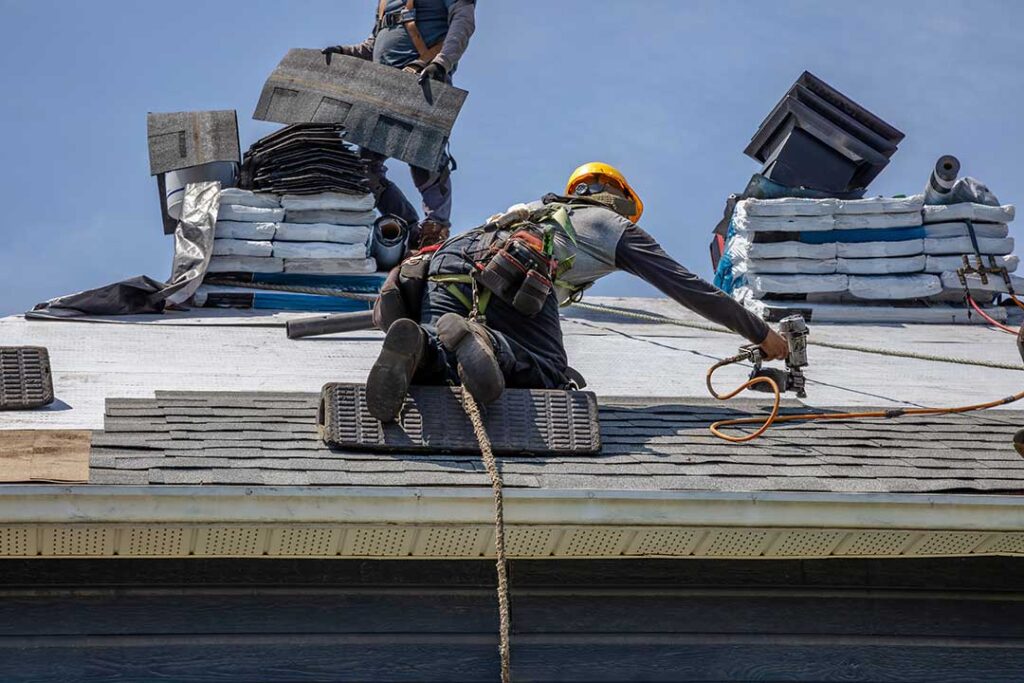
A roof tear-off is the complete removal of existing roofing materials before a new roof system is installed. In Marcy, NY, the process can involve more than pulling off shingles: crews may also remove underlayment, flashing, damaged decking, vents, and other layers that have reached the end of their useful life.
Understanding the sequence helps homeowners prepare for noise, debris, weather concerns, and possible changes to the project if hidden damage is uncovered.
What happens before the tear-off begins?
Before removal starts, the roof area and surrounding property are prepared. This usually includes checking access points, protecting landscaping, identifying outdoor fixtures, and planning where removed materials will be placed temporarily.
The work area may include:
- Protective coverings over shrubs, siding, windows, and nearby surfaces
- Temporary protection for decks, walkways, and exterior equipment
- A designated area for roofing debris
- Removal or relocation of outdoor furniture, decorations, and fragile items
- A review of vents, chimneys, skylights, gutters, and roof edges
Homeowners should also secure loose objects inside the house. Tear-off work creates repeated vibration, which can cause pictures, shelf items, or hanging decorations to shift. Pets may react to the unfamiliar noise, so a quiet indoor space away from the work area is often useful.
The roof should be checked for weather conditions before removal begins. A tear-off exposes the roof deck, so rain, wet snow, or strong winds can interrupt the work or require temporary protection.
How long does a roof tear-off take?
A straightforward tear-off may be completed in a day, while larger or more complicated roofs can take longer. The schedule depends on the roof’s size, pitch, number of layers, access, weather, crew size, and condition of the underlying materials.
A simple roof with one layer of asphalt shingles is generally easier to remove than a roof with several layers, steep sections, additions, dormers, or extensive flashing. Older homes may also contain multiple generations of roofing materials that require slower, more careful removal.
The tear-off is only one part of the overall roofing project. Removing the old materials may happen quickly, but inspection, deck repairs, installation, cleanup, and weather delays can extend the full timeline.
What does the roof look like after removal?
After the shingles and underlayment are removed, the roof deck becomes visible. The deck is the structural surface attached to the roof framing. It may be made from plywood, oriented strand board, or older plank boards, depending on the age and construction of the house.
This stage allows damaged areas to be identified. Common findings include:
- Soft or spongy sections caused by moisture
- Plywood or boards weakened around roof penetrations
- Water staining near valleys, chimneys, vents, or wall intersections
- Gaps, cracks, or improperly fastened decking
- Areas damaged by long-term leaks or ice-related moisture
- Deteriorated fascia or roof-edge materials
Not every stain requires replacement. Some marks may be old and dry, while soft or structurally weakened material is more serious. Decking should be evaluated based on its strength and ability to hold fasteners securely.
Why can the final scope change after removal?
A roof inspection from the ground or from the surface of existing shingles cannot reveal every problem. Some damage remains hidden until the roof covering is removed.
If damaged decking is found, those sections may need to be replaced before new roofing materials are installed. The same may apply to deteriorated flashing, damaged roof edges, or improperly designed drainage details.
This is not necessarily a sign that the original roof assessment was careless. It is a limitation of inspecting a covered structure. A responsible process should identify which conditions were visible beforehand and which were discovered only after the tear-off.
Homeowners should understand how unexpected repairs will be documented and approved. Clear photographs, descriptions of the affected areas, and an explanation of why the material cannot safely remain are useful for making an informed decision.
What should residents expect from the noise and disruption?
Roof tear-off is loud. The sound comes from removing shingles, pulling fasteners, moving materials, walking on the roof, and loading debris. Interior vibration may be noticeable, especially in rooms directly below the work area.
During the active removal period, it may be difficult to:
- Hold quiet conversations near the house
- Work from a room beneath the roof
- Keep windows open comfortably
- Prevent dust or small debris from entering through an open attic
- Allow pets to remain calm near the construction area
Attic insulation and ventilation should not be disturbed unnecessarily, but small amounts of dust can still move through gaps around light fixtures, attic hatches, or ceiling penetrations. Covering belongings stored in the attic can help reduce cleanup afterward.
How does local weather affect a tear-off?
Marcy has cold winters, snow, freeze-thaw cycles, and periods of strong seasonal weather. These conditions affect both scheduling and the condition of older roofs.
Winter weather can make roofing surfaces slippery and can limit how well some roofing materials seal. Spring thaw may reveal damage that developed during months of snow and ice. Summer heat can make roofing surfaces uncomfortable and may affect working hours. Autumn projects must account for shorter daylight and changing weather.
A roof should not be left exposed without an appropriate temporary covering when weather threatens. Temporary protection can reduce the risk of water entering the structure, but it is not a substitute for completing the roofing system.
Snow and ice also deserve special attention around roof edges, valleys, and areas where interior stains have appeared. Repeated freeze-thaw movement can enlarge small openings and may contribute to moisture intrusion.
What happens to the old roofing materials?
Removed shingles, underlayment, nails, and damaged wood are collected as the tear-off progresses. Roofing debris is heavy, so the disposal plan should account for the weight of the materials and the safest route away from the structure.
Loose nails are a common concern after removal. A thorough cleanup should include ground-level collection, magnetic sweeping where appropriate, and inspection of walkways, driveways, planting beds, and areas where children or pets may walk.
Some older roofing materials may require special handling. Materials that appear unusual, brittle, layered, or potentially hazardous should not be disturbed casually. The age and composition of the roof can affect disposal requirements.
What should be checked before the new roof goes on?
Before installation proceeds, the roof deck should be dry, secure, and suitable for fastening. Roof edges, valleys, penetrations, flashing, and ventilation should also be reviewed.
Important questions include:
- Are weak or rotten deck sections being removed?
- Are exposed areas protected if weather changes?
- Are roof penetrations sealed with appropriate materials?
- Is attic ventilation consistent with the roof design?
- Are gutters and drainage paths clear?
- Are old nails and loose debris being removed?
- Are changes to the work scope being explained before repairs continue?
A new roof covering cannot correct every underlying problem. Poor drainage, inadequate ventilation, damaged framing, or unresolved wall and chimney leaks may continue to cause trouble even after new shingles are installed.
What can homeowners do to prepare?
Preparation is mostly about protecting belongings, planning for noise, and keeping the work area clear. Vehicles may need to be moved, outdoor items secured, and access points kept open for safe material handling.
It is also useful to document existing conditions before work begins. Photos of siding, trim, gutters, landscaping, attic areas, and interior ceilings can provide a clear record if questions arise later.
The most useful expectation is that a tear-off reveals the true condition of the roof structure. Removing the old covering is disruptive, but it provides the opportunity to address hidden damage, improve water-shedding details, and install the new roof on a sound surface rather than covering problems that cannot be seen.
