
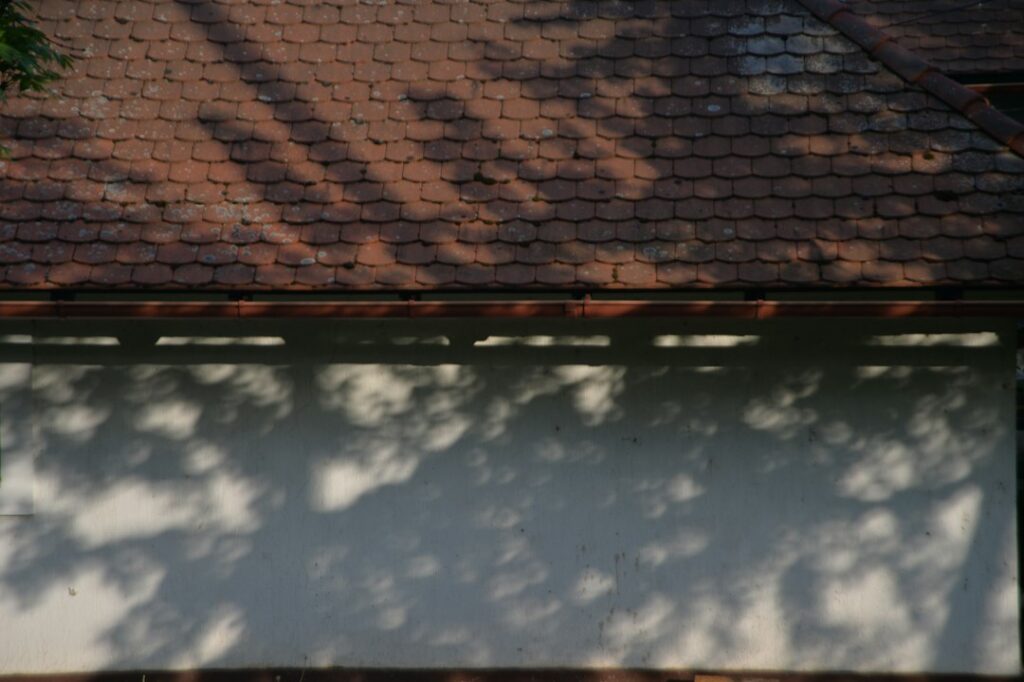
What is a cool roof?
A cool roof is designed to reflect more sunlight and release absorbed heat more effectively than a conventional dark roof. Its surface stays cooler during sunny weather, which can reduce heat transfer into the attic and living areas below.
The term does not refer to one specific roofing material. Cool roofs may include:
- Light-colored metal roofing
- Reflective asphalt shingles
- Coated or reflective membrane roofing
- Reflective roof coatings
- Certain tile, composite, and low-slope roofing products
A roof does not have to be bright white to provide these benefits. Some darker-looking materials use special pigments that reflect a greater share of invisible near-infrared energy.
How can a cool roof reduce summer heat?
The main benefit is reduced solar heat gain. A dark roof absorbs a substantial amount of sunlight, becoming much hotter than the surrounding air. Some of that heat moves through the roof assembly and raises attic and upper-floor temperatures.
A more reflective roof sends more solar energy away from the building. A roof with good thermal emittance also releases some absorbed heat instead of holding it at the surface.
For a home with air conditioning, this can reduce the amount of work required to maintain comfortable indoor temperatures. The greatest effect is usually noticed during sunny afternoons, especially in rooms directly below the roof.
Homes without central air conditioning may also feel more comfortable. A cooler roof can help reduce peak indoor temperatures, although it will not replace attic insulation, ventilation, shading, or efficient windows.
Are cool roofs useful in the climate around Marcy, NY?
Yes, but the benefits should be considered as part of a complete roof system rather than as a stand-alone solution. Marcy has warm summer conditions as well as long periods when buildings require heating. That means a cool roof may provide useful summer benefits, but projected savings are generally less dramatic than they would be in a consistently hot climate.
The roof’s orientation, color, insulation level, attic ventilation, building size, and air-conditioning use all affect the result. A home with little insulation may gain comfort from a cooler roof, but adding insulation and sealing air leaks may produce a larger overall improvement.
Winter performance also deserves attention. Because a reflective roof absorbs less sunlight, it may provide slightly less passive solar warming during cold weather. In a northern heating climate, that tradeoff should be evaluated along with insulation, air sealing, snow cover, and the home’s heating system.
Snow often covers roof surfaces during winter, reducing the practical importance of roof color for portions of the heating season. Still, moisture control and proper roof ventilation remain essential.
Can a cool roof lower energy bills?
It can lower summer cooling use, but the savings vary widely. A cool roof is not automatically a major energy-saving investment for every household.
Savings are more likely to be noticeable when:
- The roof has a large, sun-exposed area
- Finished rooms are located directly below the roof
- The home uses air conditioning regularly
- The attic or roof assembly has limited insulation
- The existing roof is very dark and absorbs substantial heat
- The replacement roof is being installed as part of planned maintenance
Savings may be modest when the home has excellent insulation, limited air-conditioning use, substantial shade, or a small roof area. A roof that is already in good condition should not necessarily be replaced early only to obtain reflective properties.
The most reliable evaluation compares the roof’s expected reflectance and thermal performance with the building’s insulation and heating and cooling patterns.
Can a cool roof make a roof last longer?
Lower surface temperatures may reduce some heat-related stress on roofing materials. Repeated heating and cooling can cause materials to expand and contract, and high temperatures can accelerate aging in certain roof systems.
A cool roof may help moderate these effects, but it does not guarantee a longer service life. Installation quality, drainage, flashing, attic moisture, snow and ice exposure, wind, algae, fallen branches, and routine maintenance often have greater influence on durability.
A reflective surface also cannot correct an old roof deck, failed flashing, inadequate ventilation, or water entering around chimneys and roof penetrations.
What are the environmental benefits?
Cool roofs can reduce electricity demand during hot, sunny periods by lowering the need for air conditioning. At a larger scale, reduced cooling demand can also lower power-plant emissions and help moderate heat buildup in densely developed areas.
The community-wide effect is generally more noticeable where many buildings have large roof areas and paved surroundings. In a lower-density residential area, the primary benefit is usually building comfort and reduced cooling demand rather than a dramatic change in outdoor temperatures.
Cool roofs should not be confused with green roofs. A green roof uses vegetation and growing media to provide shade, absorb rainfall, and reduce heat. A reflective roof mainly manages sunlight and heat. A reflective roof does not provide the same stormwater benefits as a planted roof.
Do cool roofs require special maintenance?

Maintenance is generally similar to that of other roofs, but dirt and biological growth can reduce reflectivity. Leaves, moss, algae, and accumulated debris may make a roof absorb more heat over time.
In the local seasonal environment, roof surfaces may also face:
- Snow and ice accumulation
- Freeze-thaw cycles
- Wind-driven rain
- Fallen branches
- Spring debris and organic buildup
- Moisture near poorly ventilated attics
Cleaning should follow the roofing material manufacturer’s instructions. Aggressive power washing or harsh chemicals can damage shingles, coatings, membranes, or metal finishes. A roof should not be walked on casually, particularly when wet, icy, steep, or fragile.
Are light-colored shingles always the best choice?
Not necessarily. Color is one factor, but solar reflectance and thermal emittance provide a more useful technical comparison. Two roofs with similar visible colors may perform differently, while some darker “cool color” products may reflect more infrared energy than ordinary dark materials.
Other factors may matter just as much:
- Roofing material and expected service life
- Resistance to wind, moisture, and impact
- Compatibility with the roof slope
- Ice-dam and drainage considerations
- Attic insulation and ventilation
- Appearance within neighborhood design expectations
- Manufacturer installation requirements
- Long-term reflectivity after weathering
A roof should be selected as a complete assembly. Reflective properties are valuable only when the roof also provides dependable water shedding, secure flashing, adequate ventilation, and appropriate resistance to local weather.
What should homeowners consider before choosing one?
A cool roof is most practical when replacing an aging roof, constructing an addition, or improving a building that becomes uncomfortably hot in summer. Before making a decision, consider:
1. Whether the existing roof needs replacement for age, leaks, or damage.
2. How much insulation is present above the living space.
3. Whether attic air sealing and ventilation need improvement.
4. How often the household uses air conditioning.
5. The roof’s sun exposure and shade from trees or nearby structures.
6. How the material handles snow, ice, wind, and moisture.
7. Whether the product’s long-term reflectivity is documented.
8. Whether the proposed assembly complies with applicable New York construction requirements.
For many homes, the best result comes from combining a reasonably reflective roof with adequate insulation and careful moisture control. In Marcy, NY, that balanced approach recognizes both sides of the local weather pattern: sunny summer heat and a substantial cold-weather heating season.
