
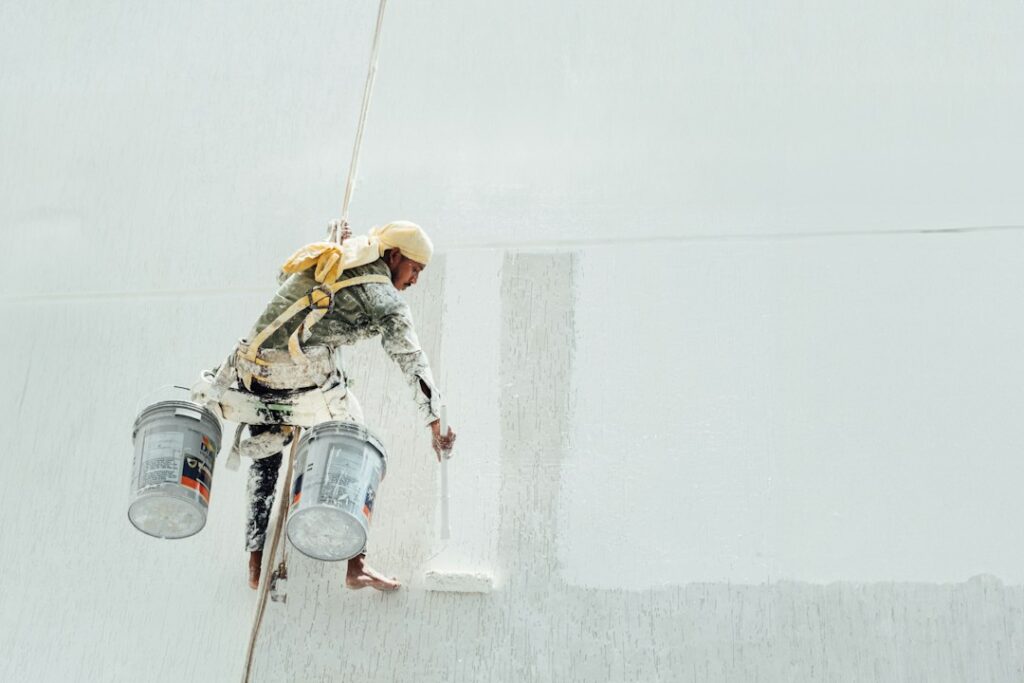
Roof coatings can extend the service life of some roofing systems, improve water resistance, and reduce surface wear. They are not a universal replacement for a new roof, however, and their success depends heavily on the existing roof’s condition, material, drainage, and preparation.
What is a roof coating?
A roof coating is a fluid-applied material spread over an existing roof surface. After curing, it forms a continuous protective layer that can help limit water intrusion, ultraviolet damage, surface oxidation, and weather-related deterioration.
Common coating categories include:
- Acrylic coatings: Water-based products that reflect sunlight and are often used on relatively sound roof surfaces.
- Silicone coatings: Flexible coatings with strong resistance to standing water, although they can attract dirt and may be slippery when wet.
- Polyurethane coatings: Tough, abrasion-resistant materials often selected where impact or foot traffic is a concern.
- Asphalt-based coatings: Materials used with certain built-up or modified bitumen roofing systems.
The coating must be compatible with the roof beneath it. A product designed for a low-slope membrane may not be appropriate for asphalt shingles, metal panels, or a roof with exposed wood.
What are the main advantages?
The primary benefit is added protection for a roof that is still structurally serviceable. A coating may seal small surface imperfections, reduce exposure to sunlight, and slow the aging of roofing materials.
Other potential benefits include:
Extending useful roof life
A coating can help protect an aging roof from repeated wetting, drying, freezing, and thawing. This may delay more extensive work when the underlying roof remains dry, well-adhered, and adequately supported.
That does not mean the coating restores a failed roof. It works best as a maintenance or life-extension measure rather than as a cure for widespread deterioration.
Reducing minor leaks and surface wear
A continuous coating can cover small cracks, pinholes, seams, and weathered areas when those conditions are limited and properly prepared. It may also help protect exposed reinforcement or aged membrane surfaces from further breakdown.
Existing leaks still need to be identified and repaired before coating. Applying material over wet insulation, open seams, or active leaks can conceal the problem without correcting it.
Improving reflectivity during warm weather
Light-colored coatings reflect more solar energy than many dark roof surfaces. This can lower roof-surface temperatures during sunny weather and may reduce heat transfer into upper floors or attic spaces.
The effect is most noticeable on low-slope roofs with broad, exposed surfaces. In a cold-climate community such as Marcy, reduced summer heat gain may be useful, but it does not eliminate the need for proper attic ventilation and insulation.
Creating fewer tear-off materials
Because a coating is often applied over an existing roof, it may reduce the amount of old roofing material sent for disposal. It can also limit the disruption, noise, and temporary exposure associated with complete roof removal.
This advantage applies only when the existing roof qualifies for coating. A roof with saturated insulation, extensive decay, or unstable layers may still require removal.
What are the disadvantages?
Roof coatings have real limitations. The most serious is that they cannot correct structural problems or replace missing roofing components.
They do not fix a failing roof
A coating cannot repair rotten decking, sagging roof sections, widespread blistering, damaged insulation, or poor structural support. It also cannot correct major drainage failures or rebuild missing flashing.
If water is trapped below the roof surface, coating over it may create additional problems. Moisture can remain concealed, and freeze-thaw cycles can cause bubbling, delamination, or further separation.
Preparation can be extensive
A successful application usually requires cleaning, drying, seam treatment, fastener inspection, and repair of damaged areas. Dirt, loose granules, chalking, oil, moss, and old peeling material can prevent proper adhesion.
Preparation may take more time than the visible coating work. Skipping this step is a common reason for premature failure.
Weather affects installation and curing
Coatings generally need suitable temperatures, dry conditions, and enough curing time. Cool weather, high humidity, dew, rain, and overnight freezing can interfere with bonding or drying.
In Marcy, seasonal timing matters. Late fall applications may face short daylight periods, damp surfaces, and freezing temperatures. Snow and ice also make roof access hazardous and can prevent proper surface preparation.
Snow and ice place repeated stress on roofing
A coating does not make a roof immune to winter damage. Ice dams, snow accumulation, drifting, and freeze-thaw movement can still stress edges, valleys, penetrations, and flashing.
A roof with recurring ice-dam problems may need improvements to air sealing, insulation, ventilation, drainage, or flashing. Coating alone does not address the source of those conditions.
Some coatings change roof maintenance needs

Certain products can become dirty, lose reflectivity, or wear unevenly. Silicone surfaces may be slick when wet. Granular systems can shed material if poorly bonded, while some coatings are vulnerable to abrasion from repeated foot traffic.
Future repairs may also require compatible materials. A coating system should be documented so later maintenance does not involve guesswork.
Can roof coatings be applied over asphalt shingles?
Usually, coating over asphalt shingles is not a simple or broadly suitable solution. Shingles are designed as layered roofing units with overlapping edges, granules, underlayment, and flashing details. Coating can interfere with those components, trap moisture, or affect how water drains between courses.
Some specialized systems may be approved for particular shingle roofs, but the product instructions and existing roof condition must be evaluated carefully. A coating should not be used to disguise curled, brittle, missing, or heavily damaged shingles.
Are roof coatings suitable for metal roofs?
They can be, particularly when the metal panels are structurally sound and corrosion is limited. Metal roofs may benefit from coatings that protect against surface oxidation, seal fasteners and seams, and accommodate normal thermal movement.
Rust must be removed or stabilized, loose fasteners corrected, and incompatible old coatings addressed before application. Coating over active corrosion or loose paint usually produces a short-lived result.
Are roof coatings suitable for flat or low-slope roofs?
Low-slope roofs are often the most practical candidates because they have large surface areas and may use membranes or built-up systems designed for fluid-applied products.
Drainage must be examined closely. A coating does not correct ponding caused by inadequate slope, blocked drains, settlement, or damaged scuppers. Standing water can shorten the life of some coating systems and may reveal a deeper design or maintenance problem.
How long can a roof coating last?
Service life varies widely. Product type, application thickness, roof movement, sunlight, ponding water, foot traffic, snow, and maintenance all affect durability.
A coating may require periodic inspection and additional application in high-wear areas. It should not be judged only by the number of years advertised for the material. The condition and age of the roof underneath remain equally important.
What should residents check before considering a coating?
Before choosing this approach, examine:
- Whether the roof is currently dry and structurally sound
- The amount of remaining roofing material life
- Evidence of wet insulation or soft decking
- Condition of flashing, seams, penetrations, drains, and edges
- Areas of ponding water
- Previous coatings and their compatibility
- Expected exposure to snow, ice, branches, and foot traffic
- Whether the roof can be safely accessed and prepared
A coating makes the most sense when the underlying roof is repairable, drainage is adequate, and the goal is protection rather than concealment. If major components are failing, replacement or more substantial reconstruction may be the more durable solution.
